Good riding is often misunderstood as something forceful, dramatic, or highly visible. In reality, some of the most effective horsemanship is quiet. Calm riders tend to create calmer horses, clearer communication, and more dependable partnerships. What looks understated from the outside is often the result of real skill.
Horses Respond to Energy
Horses are highly sensitive animals. They notice tension, hesitation, inconsistency, and confidence long before a rider says anything with the reins or legs. This is why a rider’s state of mind matters so much. Calmness is not just a personal quality; it directly affects the horse’s response.
A quiet rider helps create an atmosphere in which the horse feels more settled, more attentive, and more willing to listen. That foundation makes every other part of riding more effective.
Quiet Does Not Mean Passive
There is a difference between being quiet and being inactive. Quiet horsemanship still requires clarity, intention, and timing. The aim is not to do less for the sake of it, but to do only what is needed, and to do it well.
Riders who develop this quality tend to look more composed because their aids become more precise. They stop over-explaining, over-correcting, or reacting too quickly, and begin to ride with greater feel.
Partnership Grows Through Trust
Trust between horse and rider rarely comes from one impressive moment. It is built gradually, through repeated experiences in which the horse learns that the rider is steady, fair, and predictable. Calm riding helps create that trust because it reduces confusion.
When a horse feels secure, responses become softer and more willing. That change is often subtle, but it is one of the most important developments in riding.
The Value of Composure in Lessons
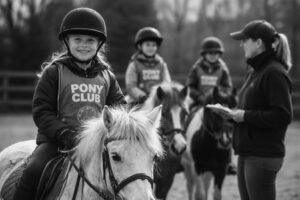
Riding lessons often reveal how much progress depends on composure rather than force. Riders who learn to breathe, stay balanced, and respond thoughtfully usually make better long-term progress than those who rely on urgency. Calmness improves decision-making, and decision-making improves riding.
This is especially true for beginners, who often assume that confidence must look bold. In practice, the most useful confidence is usually quieter than that. It appears in posture, consistency, and patience.
A Principle Across Equestrian Sport
Quiet horsemanship is not limited to one discipline. Whether the focus is flatwork, hacking, or jumping, the same principle applies: horses respond best when the rider communicates clearly without unnecessary tension. The FEI offers a broader view of equestrian sport and standards, but at every level the best riding still depends on partnership rather than force.
The Holmescales View
At Holmescales Riding Centre, calm riding is part of building strong foundations. The goal is not just to teach movement, but to help riders understand how horses think, react, and learn. That understanding makes riding more effective and far more enjoyable.
Quiet horsemanship does not demand less skill. It demands more awareness. And in the long run, it is often what creates the most confident riders and the best partnerships.